Drilling Fluid Waste Stabilisation

Turn spent bentonite and polymer drilling mud into a spadeable solid for loading, haulage and disposal.

Drilling mud is designed to hold on to its water, which is exactly what makes it hard to solidify. AuraChem screens grades against mud taken from your returns or sump, after it has picked up cuttings and make-up water, before recommending a product.

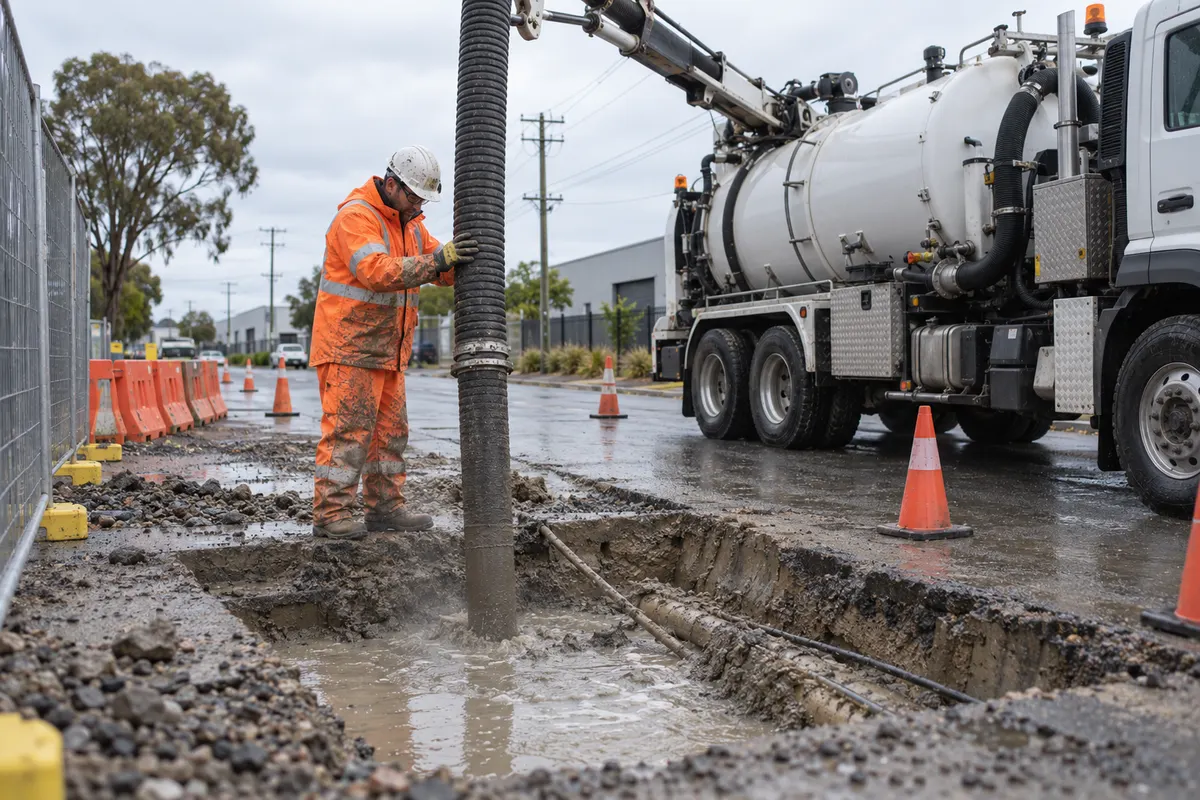
Drilling rig and fluid processing equipment at an Australian project site

Where Spent Drilling Mud Comes From

Horizontal directional drilling for pipelines and utilities, bored piling, water bores, geotechnical investigation and mineral exploration all generate spent drilling fluid. It collects in pits, mud tanks, vacuum tankers and skip bins, usually as a thick grey or brown slurry carrying cuttings from the bore.

Mud that left the mixing tank as a clean, consistent fluid comes back changed: loaded with fine cuttings, sometimes diluted by groundwater, sometimes thickened by clay from the formation. The waste that needs treating is that returned mud, not the original recipe.


Why Bentonite Drilling Mud Resists Standard SAP

Bentonite is a swelling clay chosen precisely because it ties up water, and drilling polymers such as PHPA, xanthan gum or polyanionic cellulose add viscosity on top. Much of the water in a well-built mud is already spoken for, so a polymer added afterwards competes with the clay and additives rather than soaking up freely available water.

Salt is the second obstacle. Mud mixed with bore water or saline groundwater, or inhibited with potassium chloride, carries dissolved ions that reduce how far a sodium polyacrylate can swell. Two spent muds that look identical in the pit can need very different amounts of polymer.

Breaking the Hold Mud Has on Its Water

The polymer is worked into the spent mud with enough energy to disperse it fully, because granules that clump in a viscous fluid only treat their outer surface. Given contact time, the polymer draws water away from the clay and gels, and the slurry stiffens into a material that can be lifted with a bucket rather than pumped.

The thicker the mud, the more the outcome depends on mixing. Thin, cuttings-rich returns respond quickly; heavily viscosified mud usually needs vigorous mixing and a longer wait before it reaches a haulable consistency.

From Mud Sample to Field Dose

  1. 01Describe the mud system. Note the base clay, polymers, any salts or inhibitors, and where the make-up water comes from.
  2. 02Sample spent returns, not fresh mud. Take material from the sump or tank after drilling, with its normal load of cuttings.
  3. 03Measure salinity alongside the screen. Recording the conductivity of the mud water explains why one batch needs more polymer than another.
  4. 04Trial mixing at realistic energy. Match the test to the site equipment, whether an excavator bucket in a pit or a paddle mixer in a tank.
  5. 05Re-screen when the program changes. A new formation, a different water source or a change of mud additive can shift the dose.

Matching an AuraSorb Grade to the Mud System

Relevant ProductAuraSorb 4000 Series
When It May Be SelectedThe Rapid profile suits HDD and piling jobs where spent mud has to be treated and removed between drilling shifts.
Application-Rate ApproachAdded gradually while mixing so it disperses before it swells, at an amount set by how much mud water remains free after the clay and polymers take their share.
Relevant ProductAuraSorb 8000 Series
When It May Be SelectedSuited to mud that must stay solid through storage or a long haul, or that has to pass a no-free-liquids check at the receiving facility.
Application-Rate ApproachCompared head to head with the 4000 Series on the same spent mud, since salinity can favour one series over the other.

Mud Properties That Decide the Dose

Bentonite content
More clay means less free water and a heavier mixing demand
Drilling polymers (PHPA, xanthan, PAC)
Already hold water and raise viscosity
Salinity and inhibitors such as KCl
Dissolved ions reduce how far the polymer can swell
Cuttings load and type
Sand settles out; fine clay cuttings thicken the mud
Mud weight and viscosity
Indicate how hard the mud will be to mix evenly
Treatment location
A pit, tank, tanker or skip each limit the mixing method

What Solidifying Spent Mud Can Achieve

These are potential operational benefits subject to material testing and field or production validation.

Spent mud can be dug out and hauled as a solid instead of as a liquid load

Less weight added than with bulking agents such as sand or sawdust

Sumps and mud pits can be cleared and backfilled sooner

The dose can follow the bore as it moves through different ground

What Drilling Mud Testing Tells You

Testing on your spent mud shows whether a standard grade copes with its clay, polymer and salt content, how much is needed and how long the mud takes to firm up. Where high salinity or a heavily viscosified system turns out to be the limiting factor, the report says so, so you can decide whether to treat at a different point in the process.

Drilling Mud Solidification FAQs

Why doesn't SAP work as well in drilling mud as in water?

Bentonite and drilling polymers are already holding much of the water, and dissolved salts limit how far the polymer can swell. It still works in many muds, but the amount needed has to be measured on the actual mud.

Does potassium chloride or saline make-up water matter?

Yes. Inhibited muds and saline water reduce absorption noticeably, so they usually need a higher dose or a more salt-tolerant grade.

Should cuttings be separated before treatment?

Removing coarse cuttings with shakers or by settling reduces the volume to treat. Fine clay cuttings usually stay suspended and are treated with the mud.

Can mud be solidified inside a vacuum tanker?

Sometimes, but tankers are hard to mix in and gelled mud can be difficult to discharge. Treating after discharge into a pit, bin or bay is usually easier to control.

How do you check the mud is solid enough to haul?

The receiving facility sets the test, often a check that no liquid drains from the material. Testing beforehand confirms a dose that meets that requirement.

Other Clay and Slurry Applications

Send Us a Spent Mud Sample

We will test it with its real salt and polymer content and recommend a grade and starting dose.

AuraChem

Application-specific superabsorbent polymer solutions, stocked in Australia and supplied nationwide.

Need product or application support?

Talk with our team about product selection, samples, quotations or technical requirements.

Contact Us
© 2026 AURACHEM · AUSTRALIAN SAP SUPPLIER