Indicative addition rate
Lime Treatment
Approximately 10–30% of wet spoil
SAP Treatment
Approximately 0.1–0.5% of wet spoil


Control free liquid in variable EPB spoil and create a more consistent material for conveyor transfer, loading, haulage and disposal.
EPB tunnelling spoil can change continuously with geology, groundwater and the conditioning program. AuraChem tests suitable superabsorbent polymers against representative spoil samples and develops a practical product, application rate and dosing method around the project’s muck-handling system.
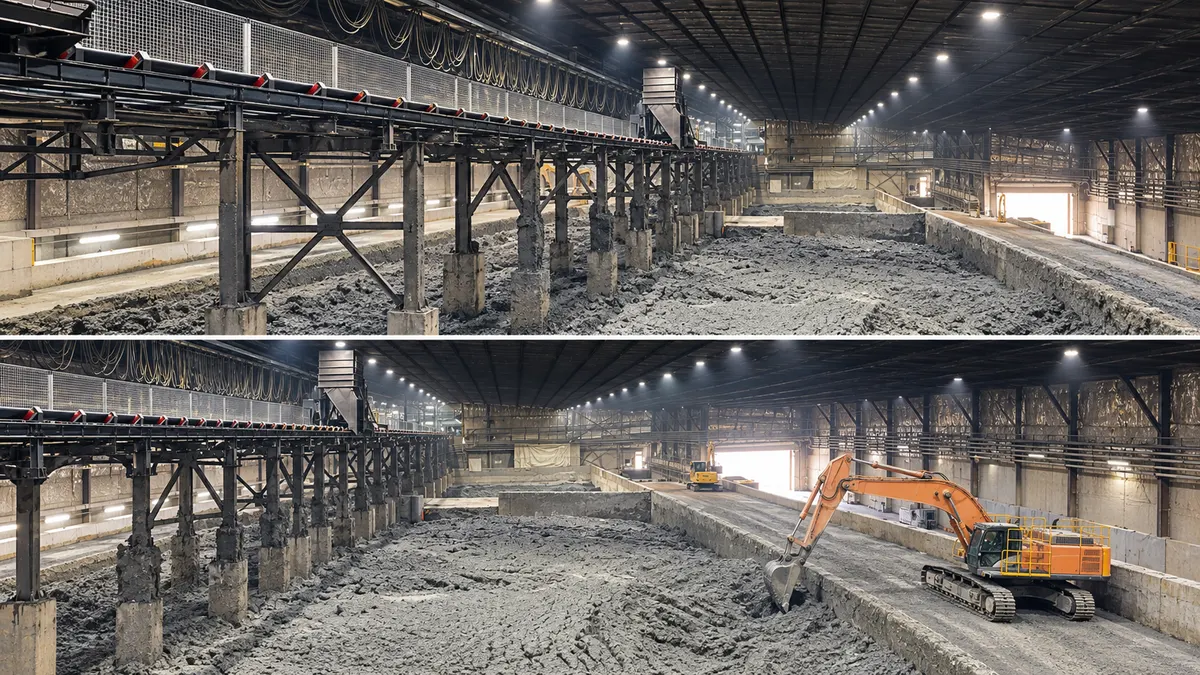
As an earth pressure balance TBM excavates, conditioned spoil is extracted through the screw conveyor. It then travels through belt conveyors and transfer points before being discharged into a spoil pit, muck bin or spoil shed. From there, the material is loaded into trucks and transported to an approved receiving facility.
If the spoil contains excessive free water, it may become difficult to load, release liquid during transport or fail a Paint Filter Liquids Test or similar receiving criterion. This can create spill and work health and safety risks, disrupt truck loading and reduce available spoil-pit capacity.
Spoil must be removed continuously to support tunnelling. If wet material cannot be loaded and transported efficiently, a full spoil pit or muck bin can slow or stop TBM production.
EPB spoil may contain changing proportions of clay, sand, rock flour, groundwater and excavated fines. Foams, surfactants, polymers and other conditioning agents can also influence how water is held within the spoil and how a particular SAP grade performs.
Changes in geology, groundwater, TBM operation or conditioning dosage can alter the required product and application rate. Salinity, dissolved ions, pH, solids content and available mixing must also be considered.
For this reason, clean-water absorption figures alone are not a reliable basis for field selection.
A compatible cross-linked superabsorbent polymer is distributed through the spoil, where it absorbs available water into a swollen gel structure. With adequate distribution and contact time, this can reduce mobile liquid and create a more consistent material for conveyor transfer, loading and transport.
Selected SAP grades can absorb many times their mass in water. Some products may absorb approximately 100 times their own mass under suitable clean-water test conditions. Actual absorption in EPB spoil is usually lower and depends on geology, groundwater chemistry, conditioning agents and mixing.
Indicative SAP application rates may fall between approximately 0.1% and 0.5% by weight of total wet spoil. The operating rate must be established through representative sample testing and field validation.
Lime is commonly used on Australian tunnelling projects to treat wet EPB spoil. Depending on moisture content, geology and the required consistency, typical lime addition rates may range from approximately 10–30% by weight of wet spoil.
Adding lime at these rates can substantially increase the mass and volume of treated material. This may result in:
By comparison, SAP is typically applied at approximately 0.1–0.5% by weight of wet spoil, subject to representative testing and field validation.
A suitable SAP absorbs available water without introducing the large quantity of mineral solids associated with lime treatment. It can therefore improve spoil consistency while minimising additional treatment mass and avoiding the significant pH increase commonly associated with lime.
Lime Treatment
Approximately 10–30% of wet spoil
SAP Treatment
Approximately 0.1–0.5% of wet spoil
Lime Treatment
Adds mineral solids and chemically reacts with moisture
SAP Treatment
Absorbs available water into a gel structure
Lime Treatment
High
SAP Treatment
Very low by comparison
Lime Treatment
Can substantially increase spoil pH
SAP Treatment
Generally avoids the large pH increase associated with lime
Lime Treatment
Added treatment mass may increase truck movements
SAP Treatment
Lower addition mass may avoid additional truck movements
Lime Treatment
Larger treatment-product volumes required
SAP Treatment
Considerably smaller product-storage footprint
Actual treatment rates and outcomes depend on the project material and operating conditions. Representative testing should be completed before comparing consumption, cost or performance.
SAP treatment does not automatically determine or preserve the regulatory classification of the spoil. Classification and disposal acceptance must be confirmed for the treated material under the applicable project, regulatory and receiving-facility requirements.
The primary AuraSorb series for EPB tunnelling spoil.
Standard profile
Suited to dependable general-purpose treatment where sufficient mixing and contact time are available.
Rapid profile
Can be evaluated where faster interaction with available liquid is required.
Can be evaluated where enhanced liquid retention, improved stackability or a drier-feeling treated material is required.
Final product selection depends on spoil composition, conditioning chemistry, treatment speed and the required handling outcome.
Discuss the Appropriate AuraSorb SeriesSAP can be applied directly to a spoil pit, muck bin or treatment area and mixed using suitable site equipment. This method may suit batch treatment where sufficient mixing and contact time are available before loading.
For continuous operations, SAP can be dosed onto a belt conveyor before a transfer point. The movement of the spoil through the transfer point assists product distribution before the material reaches the spoil pit.
An automated dosing system may include:
The dosing rate can be adjusted according to conveyor throughput and changing spoil conditions. Final system design must consider calibration, dust control, safe access and reliable product distribution.
These benefits remain subject to representative testing and field validation.
Reduces mobile and drainable liquid within the spoil.
Creates a more manageable material for continuous truck loading and haulage.
Helps limit liquid release or spoil liquefaction during transport.
Faster treatment and spoil removal can help maintain spoil-pit capacity and reduce the risk of interrupting excavation.
SAP is normally applied at substantially lower rates than lime and other mineral bulking agents.
Avoiding large lime additions may reduce additional truck movements, fuel consumption and associated emissions. SAP does not reduce the original quantity of excavated spoil.
Confirm the TBM discharge arrangement, conveyor route, transfer points, spoil storage and required handling outcome.
Screen suitable grades using spoil that reflects the project’s geology, groundwater and conditioning program.
Assess free-liquid control, response time, final consistency and sensitivity to changing moisture conditions.
Consider the screw-conveyor discharge, belt conveyor, transfer point, spoil pit or another controlled treatment location.
Confirm distribution, contact time and acceptance criteria under actual production conditions, then adjust the dose as drive conditions change.
Testing can provide:
These findings provide a starting point for field validation rather than a guaranteed operating dose.
Indicative rates may fall between approximately 0.1% and 0.5% of total wet spoil. The actual rate depends on free water, geology, groundwater chemistry, conditioning agents, mixing and the required consistency.
Depending on the moisture content, geology and required outcome, typical lime addition rates may range from approximately 10–30% by weight of wet spoil. The actual requirement must be determined for the project material.
A suitable SAP can reduce mobile liquid and may help treated spoil meet the relevant free-liquid criterion. Compliance must be confirmed using the project or receiving facility’s required test method.
SAP primarily changes the physical handling condition of the spoil. It does not automatically determine or preserve its regulatory classification. Classification and disposal acceptance must be confirmed for the treated material.
Yes. Surfactants, polymers, salinity and dissolved ions can affect absorption and gel behaviour. Testing should use spoil produced with the actual conditioning program where practical.
Yes. A dry-product screw feeder can be linked to conveyor load cells and suitable process measurements to adjust the dose according to spoil throughput and changing conditions.
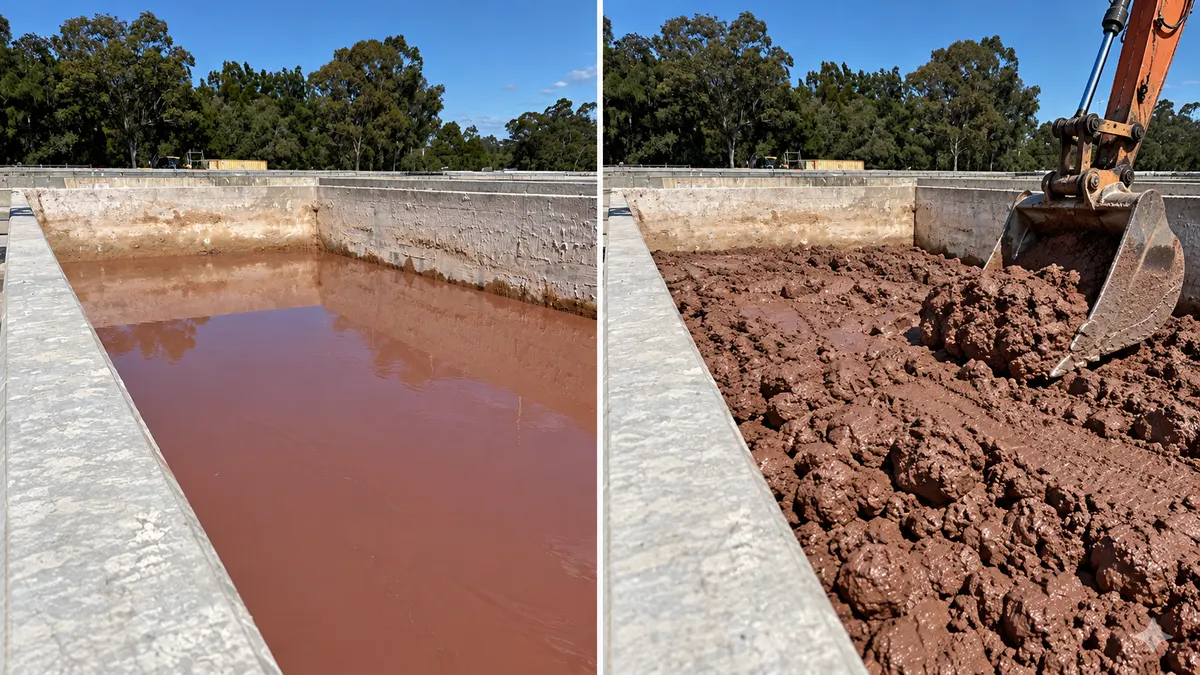
Shafts, portals and station boxes produce wet muck and grout return alongside TBM spoil.
Relevant Products
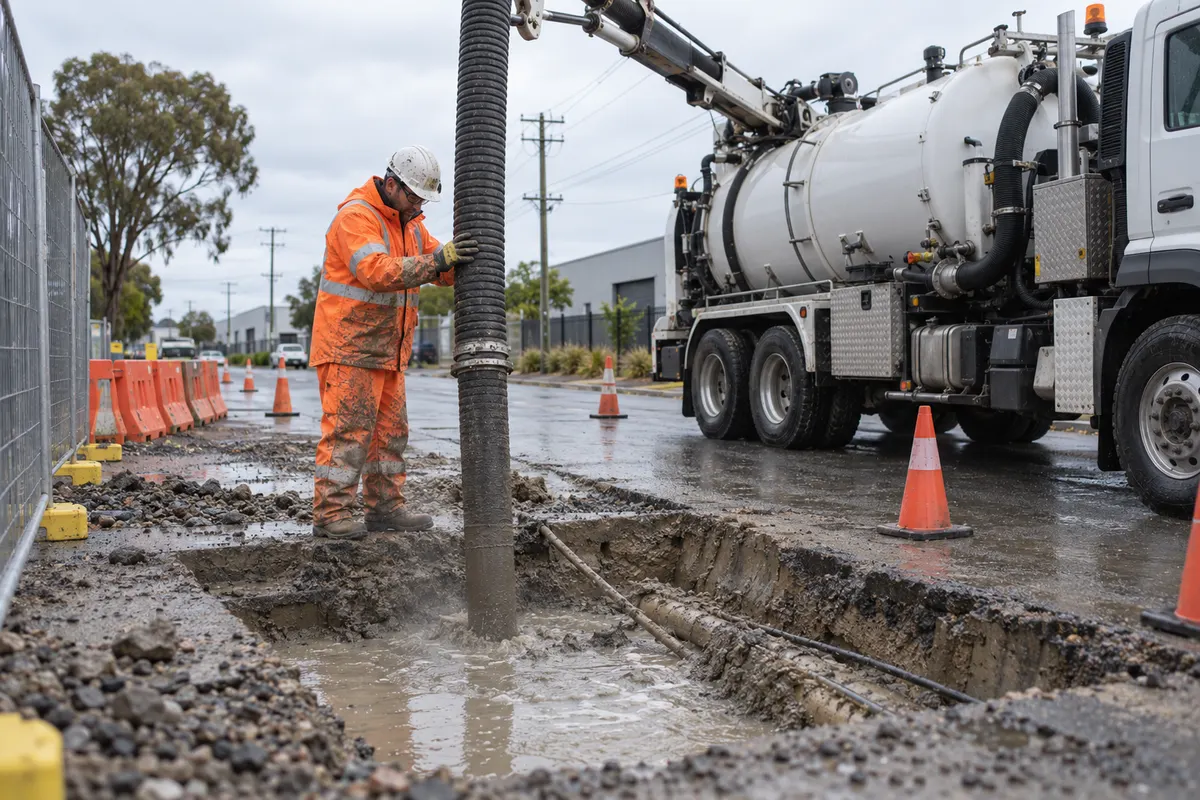
Service location and potholing ahead of tunnel works produce watery soil slurry that needs thickening.
Relevant Products

Bentonite and polymer support fluids from piling and slurry walls hold water in a similar way to conditioning agents.
Relevant Products
Talk with AuraChem about representative spoil testing, product selection and a practical dosing method for your tunnelling project.